
Nix Just Raised $10M for Sweat Sensors — Do You Need One to Nail Your Fall Race?
Sweat sensors are getting serious investment. Here's what they do, what they don't, and whether your watch already has enough.
In Summary
- Nix Biosensors just closed a $10M Series A to bring sweat data to consumer health.
- Dedicated sweat sensors measure fluid and sodium loss in real time — but cost $129+ and use single-use patches.
- Your Apple Watch or Garmin already tracks the inputs needed for a personalised hydration plan.
- Sweatr turns your existing wearable data into a plain-language fueling plan — no extra hardware required.
The Hydration Hardware Arms Race Is Heating Up
In September 2026, Nix Biosensors announced a $10 million Series A round, bringing total funding to $17 million. Investors include the family office behind CLIF Bar, 23andMe founder Anne Wojcicki, and owners of multiple professional sports teams. The message is clear: serious money believes sweat science is the next frontier in endurance performance.
Meanwhile, Garmin launched nutrition tracking inside Connect+ at CES 2026. TrainingPeaks integrated with hDrop, another wearable sweat sensor, to pipe hydration data directly into coaching dashboards. Everywhere you look, the endurance tech world is racing to own the connection between what your body loses during exercise and what you put back in.
But here is the question every runner, cyclist, and triathlete training for a fall race should be asking: do you actually need to buy a sweat sensor to get your hydration right on race day?
What Dedicated Sweat Sensors Actually Do
A device like the Nix Biosensor sticks to your skin via a single-use adhesive patch and analyses your sweat as you exercise. It measures two things in real time: how much fluid you are losing per hour (your sweat rate) and how much sodium you are losing with it. That data streams to your phone, watch, or bike computer, and the system sends alerts telling you when to drink and roughly how much.
This is genuinely useful science. Knowing your real-time sweat rate removes the guesswork that leads athletes to either under-hydrate (hello, cramps and fading pace) or over-hydrate (hello, hyponatremia). And sodium loss matters because athletes with high sodium concentrations in their sweat — so-called salty sweaters — need a different electrolyte strategy than average.
For professional athletes and sports science labs, this is a game-changer. For an everyday runner training for the Chicago Marathon in three weeks? The calculus is different.
The Cost of Real-Time Sweat Data
The Nix starter kit costs around $129 and comes with a reusable pod plus a limited number of single-use patches. Each patch works for one workout. If you want to test across different conditions — a hot Saturday long run versus a cool Tuesday tempo — you burn through patches fast. Replacement packs add ongoing cost.
hDrop follows a similar model: a wearable sensor that requires disposable test strips. The TrainingPeaks integration means your coach can see the data, but you still need to interpret it or pay someone who can.
This is the pattern across the hydration hardware space in 2026: the sensors collect excellent data. But the data arrives as numbers on a screen — sweat rate 1.4 L/hr, sodium concentration 920 mg/L — and the athlete is left asking the same question they had before: so what do I actually drink?
What Your Watch Already Knows
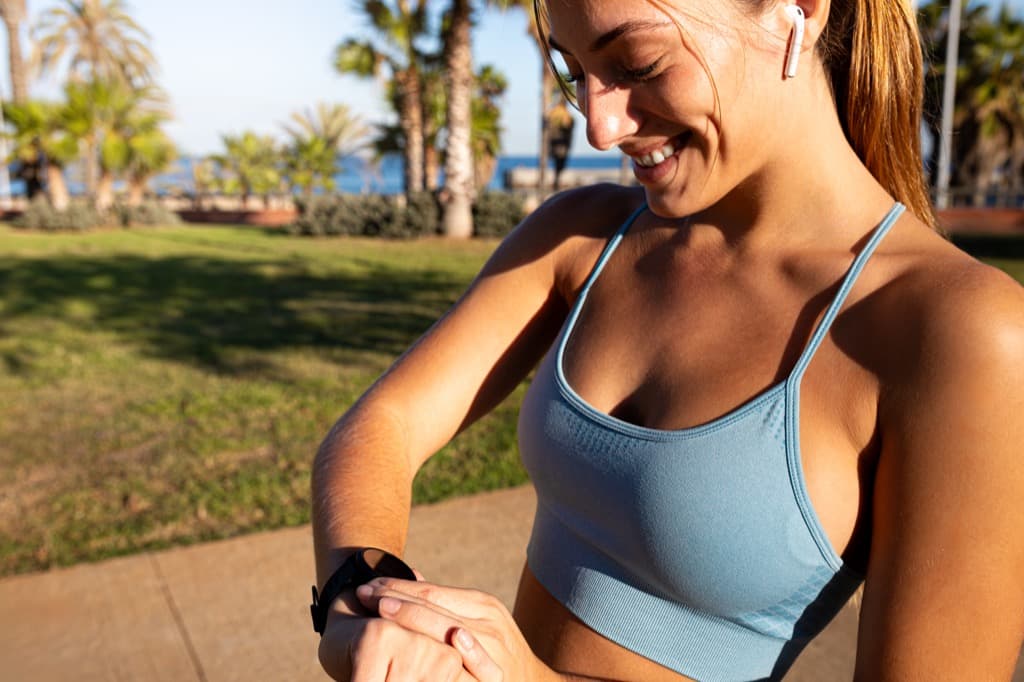
Here is what most endurance athletes overlook: your Apple Watch, Garmin, or Strava-connected wearable already tracks the raw inputs needed to build a personalised hydration and fueling plan.
Heart rate data tells you how hard your cardiovascular system is working. Heart rate drift — a gradual rise in heart rate at a steady pace — is one of the earliest signals of dehydration, often showing up before you feel thirsty. Your watch records this on every single run.
Pace and duration determine how much energy you burn and how much glycogen you deplete. A four-hour marathoner needs a fundamentally different fueling plan than a three-hour marathoner, and your watch knows exactly where you fall.
Environmental conditions matter enormously. Sweat rate can vary by 50 percent or more between a cool autumn race and a hot summer training run. Your watch logs the date, time, and location of every workout — data that can be cross-referenced with weather conditions to estimate how heat and humidity will affect your hydration needs.
Training load and recovery metrics — HRV, Body Battery, training readiness scores — influence how efficiently your body processes fuel. A fatigued athlete absorbs carbohydrates and fluids differently than a fresh one. This data sits in your watch right now.
The problem has never been a lack of data. The problem is that no one — not Garmin, not Apple, not Strava — takes that data and converts it into a sentence you can act on during mile 18 of your marathon.
Where Garmin Connect+ Nutrition Falls Short
Garmin's Connect+ nutrition tracking, launched in January 2026, lets you log food via a searchable database, barcode scanner, or AI-powered photo recognition. You can track calories and macros, see how your diet compares to your training load, and view long-term trends.
But the reviews tell a consistent story. DC Rainmaker noted that the AI photo recognition struggles with accuracy — five kernels of corn counted as one cup. The 5K Runner's review found that the feature failed more often than it succeeded in real-world testing. Forum users report a limited food database, no micronutrient tracking beyond basic macros, and no recipe creation with defined serving sizes.
More fundamentally, Garmin Connect+ tracks what you ate yesterday. It does not tell you what to eat tomorrow. It logs your breakfast but does not generate a race-day fueling plan. It shows you burned 2,800 calories on your long run but does not translate that into "take a gel at 45 minutes, drink 200ml of electrolyte mix at every aid station, and switch to water-only in the final 5k."
The gap between food logging and fueling intelligence is the gap Garmin has not closed. And it is the gap that matters most when you are standing at the start line of your fall marathon.
The TrainingPeaks + hDrop Integration: Close, But Not Quite
TrainingPeaks recently integrated hDrop hydration sensor data directly into workout notes. Coaches can now see sweat loss, sodium loss, and hydration behaviour alongside power, heart rate, and pace in the same analysis view.
This is a meaningful step. It puts hydration data where training data already lives, which means coaches can make better-informed decisions about their athletes' fueling strategies.
But for the self-coached athlete — which is most of us — this integration creates a new problem. The data is there, sitting inside a TrainingPeaks dashboard, but there is no automated translation layer. You can see that your sweat rate was 1.1 L/hr on last Saturday's long run. What do you do with that number? How do you turn it into a plan for race morning, a gel timing schedule, an aid station strategy?
TrainingPeaks assumes you either have a coach or you are fluent in sports science. Most endurance athletes are neither.
What the Data-to-Action Gap Actually Costs You
This is not an abstract problem. The data-to-action gap has real consequences on race day.
A 2026 survey by Precision Hydration found that over 60 percent of age-group marathoners finish their race having consumed less fluid than their bodies lost — not because they did not have access to hydration data, but because they did not have a plan built from that data.
Community forums tell the same story every fall race season. Athletes post: "I followed a 60g/hr carb plan and still bonked at mile 22." The plan was generic. It did not account for their body weight, their pace, the temperature drop from training to race day, or their individual sweat rate. They had the data. They just could not connect it to a decision.
The runners who get race-day nutrition right are not the ones with the most expensive sensors. They are the ones with a personalised plan — built from their actual data, tested in training, and adjusted for race-day conditions.
Building a Plan From the Data You Already Have
You do not need a $129 sweat sensor to build a personalised hydration and fueling plan. What you need is a system that takes the data your wearable already collects — heart rate, pace, duration, training load, environmental conditions — and translates it into specific, timed actions.
That means knowing your estimated sweat rate under race-day conditions (not just the hottest day you trained on). It means knowing your carbohydrate target per hour based on your body weight and finishing time. It means knowing when to take your first gel, how to time fluid intake around aid stations, and when to switch strategies if conditions change.
Sweatr does exactly this. It connects to your Apple Watch, Garmin, and Strava data, calculates your personalised hydration and fueling needs, and generates a race-day plan you can follow in plain language. No patches, no test strips, no interpretation required.
Your fall marathon is weeks away. Your watch has been collecting the data all summer. The only piece missing is the plan.
So, Do You Need a Sweat Sensor?
If you are a professional athlete, a sports scientist, or someone who genuinely wants granular, real-time sodium concentration data during training, a device like Nix is a legitimate tool. The science is real, the hardware works, and the $10M investment signals that the technology will only improve.
But if you are an age-group runner, cyclist, or triathlete training for your next event, the honest answer is: probably not. Your Apple Watch or Garmin already collects enough data to build a hydration and fueling plan that is specific to your body, your training, and your race. What you need is not more data — it is better intelligence from the data you already have.
The hydration tech arms race is producing sensors, dashboards, and food loggers. What it has not yet produced — outside of Sweatr — is a simple answer to the only question that matters: what should I drink, and when?